LOS ANGELES (AP) — California will begin to require counties to bring down coronavirus infection rates in disadvantaged communities that have been harder hit by the pandemic, a move that could slow the methodical reopening of the nation’s most populous state.
The complex new rules set in place an “equity metric” that will force larger counties to control the spread of COVID-19 in areas where Black, Latino and Pacific Islander groups have suffered a disproportionate share of the cases because of a variety of socioeconomic factors.
“We can’t allow transmission rates to be so disproportionately impacting those communities without significant effort to really reduce that disparity and reduce the burden on those communities,” Dr. Mark Ghaly, the state’s health secretary, said Thursday.
The measure could further put the brakes on the state’s conservative approach to a return to business as usual after a more rapid reopening of a larger segment of the economy in the spring, including allowing bars and indoor restaurant dining, was accompanied by surge of infections in early summer.
The latest reopening plan that took effect in August is a four-step process based on the percentage of positive tests and per capita new cases in each of the 58 counties. It allows counties to incrementally reopen businesses as they meet more rigid state standards for both numbers for two consecutive weeks. Counties can be forced to close businesses if their rates increase.
The equity measure will require that positive test rates in its most disadvantaged neighborhoods, where rates are often much higher, do not significantly lag behind the county overall.
Dr. Sergio Aguilar-Gaxiola, director of the Center for Reducing Health Disparities at the University of California, Davis, said it was an innovative approach to controlling the epidemic that he hasn’t been applied elsewhere in the U.S.
The outbreak is worse in Latino, Black and Pacific Islander communities because many work in higher-risk industries including agriculture, restaurants and nursing facilities and often live in crowded conditions that make it hard for people to isolate when they get sick. They often don’t have health care or resources if they can’t work.
Latinos make up about 40% of the state’s population of just under 40 million, but about 60% of California’s more than 800,000 COVID-19 cases and almost half the nearly 16,000 deaths.
Infections that may be isolated to disadvantaged communities can quickly spread beyond those boundaries as more businesses reopen, more people return to work and people travel from widely.
“This is kind of a Whack-a-Mole game,” Aguilar-Gaxiola said. “You have an outbreak in a specific place, and because COVID-19 doesn’t know borders they can be spread easily from one place to another.”
It was not clear how the new measure, which takes effect next week, will affect each county.
Health officials in San Diego, Orange and San Francisco counties said they already have been targeting vulnerable communities with testing for the virus, providing interpreters and taking other measures to address inequality.
“We’re happy that the state has recognized the need to focus in on these areas,” said Orange County Executive Officer Frank Kim, who said positivity rates in predominantly Latino neighborhoods have come way down since reaching double digits. Orange County’s overall rate among people tested is about 3%.
Not everyone was happy to find another hurdle on the road to recovery.
“I believe the ‘equity’ metric is a misguided bit of virtue signaling by the governor,” said Orange County Supervisor Don Wagner, who has been pushing to reopen more businesses. “It will also make it harder to safely reopen, which is the one thing we should be encouraging as that will benefit the most people, and especially the young people in our disadvantaged communities who are most impacted by the digital divide, educational uncertainties, and challenges to accessing the American dream.”
But Dr. George Rutherford, an epidemiologist at University of California, San Francisco, said the rules will support efforts by health officers who have been pressured to reopen more quickly.
“It gives the county health departments a lot of welcome cover for going more slowly than perhaps others in the counties would want,” Rutherford said.
América Bracho, chief executive of Latino Health Access, welcomed the new metric after seeing infection rates two and three times higher in Orange County’s two largest cities, Anaheim and Santa Ana, than in wealthier communities.
But she said the state’s metric doesn’t address some of the problems that made low-income communities so vulnerable to the pandemic in the first place, such as a lack of access to health care, distrust of government authorities and the need to work.
While many people are aware they should stay home when they’re ill, there’s tremendous pressure to keep working to receive a paycheck and hang onto jobs, she said.
“We think it needs to go beyond that because if you don’t have savings, you cannot stay home and not work. If you don’t have health insurance, you will be afraid of using the system,” she said. “It’s complex, and I think we need to address complexity if we want to reduce the risk for another outbreak.”
The California Department of Public Health said a team will work with advocacy groups to develop a list of resources focused on improving equity.
The city of San Francisco highlighted its work to offer free coronavirus testing, free isolation and quarantine accommodations and even paying workers minimum wage for up to two weeks to encourage them not to work when they are sick.
Taxin reported from Orange County. Associated Press reporter Olga R. Rodriguez contributed from San Francisco.
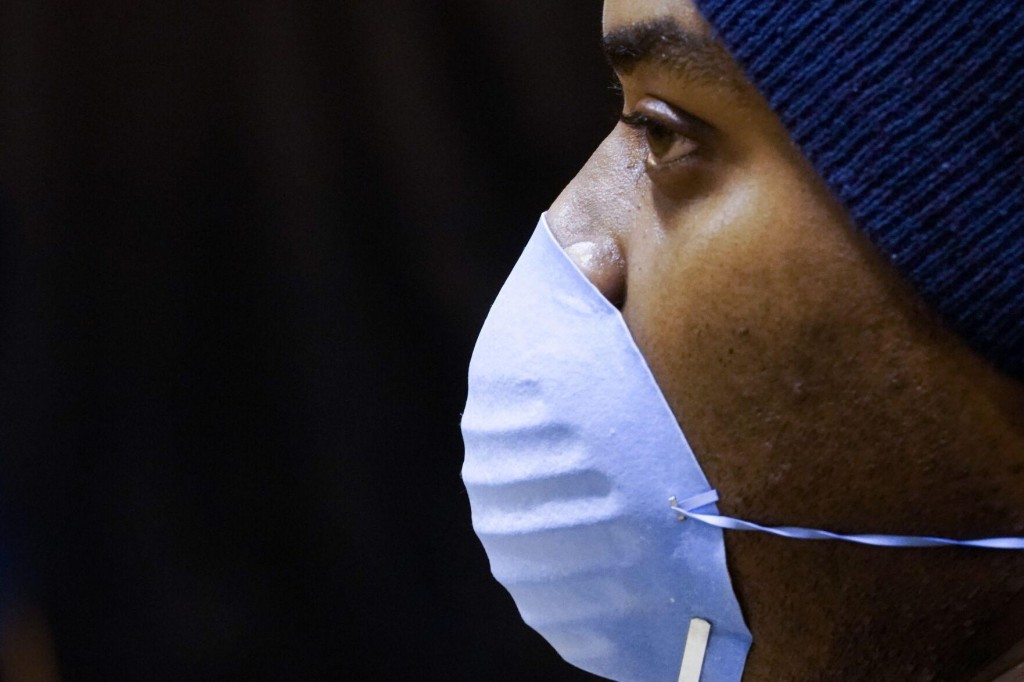
A man wearing a face mask walks past a mural Thursday, Oct. 1, 2020, in South Central Los Angeles. California's plan to safely reopen its economy will begin to require counties to bring down coronavirus infection rates in disadvantaged communities that have been harder hit by the pandemic. The complex new rules set in place an "equity metric" that will force larger counties to control the spread of the virus in areas where Black, Latino and Pacific Islander groups have suffered a disproportionate share of the cases due to a variety of socioeconomic factors. (AP Photo/Jae C. Hong)