BERLIN (AP) — A few miles from the former Berlin Wall, Frank Mader reflects on a life divided between East and West, a tale of two halves that don’t fit neatly together but which captures the twists and contradictions of Germany’s journey 30 years since its reunification.
Mader, an energetic 65-year-old, was born in East Germany and grew up in the communist country’s coal-mining heartland. Before finishing high school he began training as a machine operator — a model student in the self-styled “workers and farmers state.”
When party officials spotted his talent for writing in the factory newspaper, Mader got a place in journalism school and then a job at ADN, East Germany’s state-run news agency. It was an exclusive position that came with the rare privilege of foreign travel to Eastern bloc nations but also many potential pitfalls.
“Writing about certain issues was more or less taboo,” he told The Associated Press. “You had to rely on your gut feeling. The basic requirement was to be faithful to the state and the party.”
If Mader harbored doubts, he hid them well.
Files show that East Germany’s military intelligence and the country’ secret police, the Stasi, considered Mader trustworthy when he was appointed press attache at the embassy in Washington — an exciting prospect for a man in his early 30s who had never been to the West as an adult.
“The instructions were broad: on the one hand to collect information and send it home, one the other hand to look after journalists or groups from East Germany,” Mader said. “And also to provide information about my home country to America. Positive information, of course.”
While Mader only described his responsibilities in America in general terms, Douglas Selvage, a historian at Berlin’s Humboldt University, says all East German diplomats would have been vetted by the Stasi and likely asked to inform on their co-workers at the embassy.
“They would be expected to report on the ideological soundness of people around them,” said Selvage, who specializes in the history of the Soviet bloc, including its secret police. This could include whether co-workers made jokes about Politburo members or had a proclivity toward consumerism, which was considered decadent and not in keeping with a true communist cadre.
“There were varying degrees of collaboration,” said Selvage. “There were unofficial Stasi collaborators who wrote lots of reports. Others wrote only a few. Some ruined people’s lives, others didn’t.”
By the late 1980s, Mader could see which way the wind was blowing, thanks to his access to uncensored Western media, whose articles he compared with those from the party organs back home.
Yet he turned down American offers to defect and stayed in his post even after peaceful pro-democracy protesters burst through the Berlin Wall in November 1989.
When he returned to East Germany the following summer, the communist country’s fate was sealed: within a few months, on Oct. 3, 1990, it would become part of a new, unified Germany.
The end of communist rule meant greater freedom, but also greater uncertainty. Many East Germans lost not just their ideological convictions but also the jobs that the regime had provided for them.
“My thoughts were: Get out of politics,” Mader said. “Once and never again. I had fought for the wrong side.”
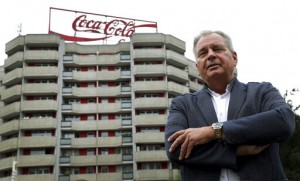
He accepted an offer to work for Coca-Cola, which was hoping to meet demand from consumers in the former communist territory thirsty for a taste of capitalist fizz. After establishing a distribution network in the east, Mader left to join a glass manufacturing firm, where he would proudly display a photograph of himself meeting then-Vice President George H.W. Bush in the 1980s.
Later, he moved into marketing fancy chocolates and marzipan. “I’m in a sweet business,” he joked.
Others found the transition much harder.
Jens Raeder was a soldier in the East German army at the time. He remembers the impact that the fall of the Wall had on some of his comrades.
“Entire livelihoods, including their ideals and and values, were completely upended from one day to the next,” he said. “A large number of professional soldiers actually took their own lives because they couldn’t cope.”
Raeder, who runs a small museum dedicated to East German military equipment, said what shocked him most were those who switched sides from one moment to the next.
“There were actually some people who were glowing communists beforehand, who wanted to haul you before a party tribunal for every little thing, and after the fall of the Wall they just did a complete turn,” he said.
After reunification, the opening up of Stasi archives revealed untold instances of betrayal and put on the spot some informants who had tried to transition seamlessly into the new order. German authorities attempted to screen applicants for civil service jobs to ensure they hadn’t been actively involved in the communist government’s efforts to control its own citizens.
The decision whether to fire people who had worked for and with the regime wasn’t always easy, said Manfred Goertemaker, who tried to vet hundreds of staff at the University of Potsdam, near Berlin, in the mid-1990s.
“It was a balancing act, trying to find the really bad culprits on the one hand and on the other hand integrating the great mass of people about whom there might have been some doubts into the new state.”
Three decades later, some victims say a real reckoning with what happened in East Germany and the turmoil surrounding reunification has yet to take place. Others, like Frank Mader, see no benefit in that.
“Why should one always root around in the past and tear oneself apart? I believe it’s more important than ever to look forward,” he said.
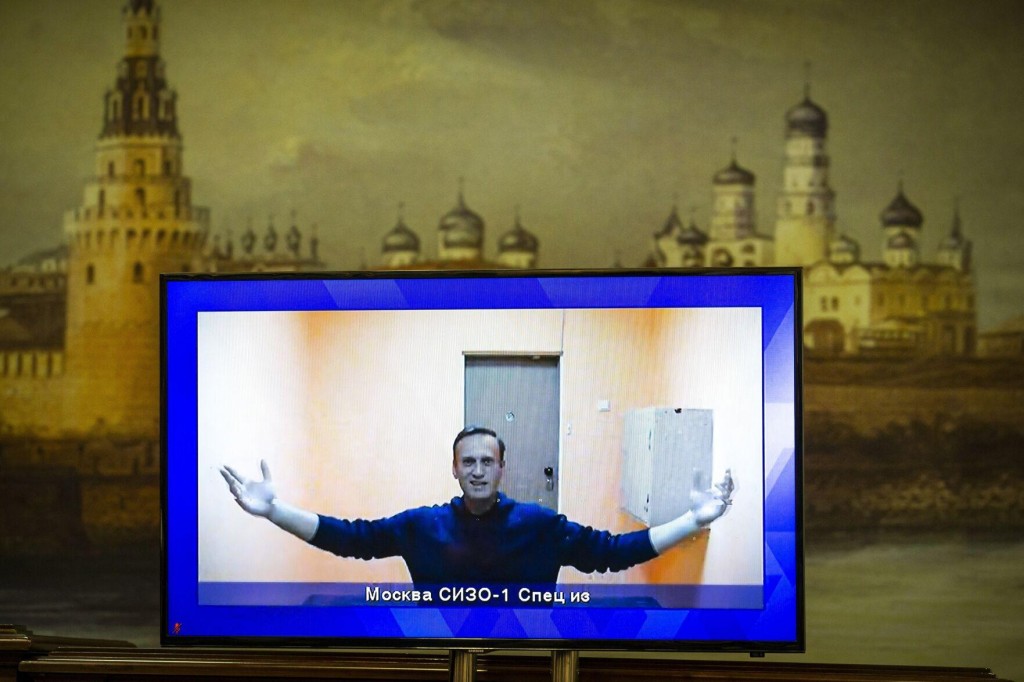
Frank Mader, former press attache of the embassy of the GDR (German Democratic Republic) in Washington, poses for a photo after an interview with the Associated Press in Berlin, Germany, Thursday, Sept. 24, 2020. Germany marks 30 years since its reunification between communist East Germany and capitalist West Germany, (AP Photo/Michael Sohn)