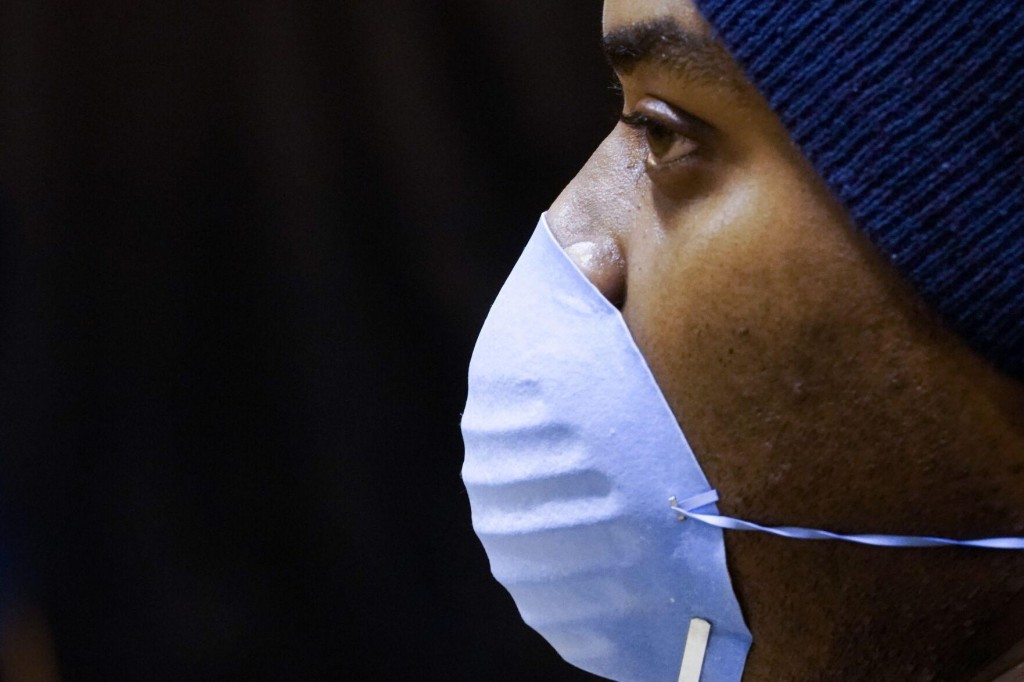
(Editor’s note: At the beginning of the COVID-19 pandemic, there were lots of articles about how to cope, how to feel better in trying times. As the pandemic has dragged on, these are less frequent, but the problem is still there, possibly even worse with the upcoming general election and social unrest. So today we are repeating some good advice.)
Americans are more unhappy today than they’ve been in nearly 50 years, according the COVID Response Tracking Study, conducted by NORC at the University of Chicago.*
It finds that just 14% of American adults say they’re very happy, down from 31% who said the same in 2018. That year, 23% said they’d often or sometimes felt isolated in recent weeks. Now, 50% say that.
Though stress and anxiety may seem inescapable at the moment, all the experts Consumer Reports spoke with said you can take steps to reign them both in. Here are nine strategies.
1. The Basics: Eating, Sleeping, Exercise
Getting enough sleep, exercising regularly, and eating a healthy diet can help you manage stress and reduce anxiety, and may help maintain a strong immune system. These goals may seem unreachable when you’re stressed out, but they don’t have to be.
Eating: It’s easy right now to eat for emotional reasons, particularly if you’re prone to that, according to Joyce A. Corsica, Ph.D., director of outpatient psychotherapy and director of bariatric psychology at Rush University Medical Center in Chicago.
Before you give in to a food craving, ask yourself whether you’re really hungry or whether you’re actually feeling frustrated, sad, empty, or lonely. Once you identify the feeling, it’s easier to consider better choices, Corsica says.
Exercise: Whether you go to the gym regularly or like to walk, jog, or ride a bike outside, your exercise regimen has probably been disrupted, too. That means you’re probably not getting your usual stress-relieving dose of the feel-good neurotransmitters endorphins that exercise provides.
But solitary outdoor walks and runs (as long as you socially distance) are still possible, and today, there are more ways to exercise indoors than ever. And you may not need a whole lot of physical activity to improve your mood; even a 15-minute walk can make a difference.
Sleeping: And though it’s not surprising that stress can keep you from sleeping well, a lack of sleep and an abundance of stress can create a vicious cycle: lying in bed awake can lead you to ruminate even more, and those swirling thoughts can further keep you from dozing off.
Basic bedroom sleep hygiene — keeping the room cool and dark, staying off electronics before bed — is a good place to start. Some sleep apps may be helpful as well, by blocking out outside noise, for instance.
2. Breathe . . . Deeply
Stressed-out people tend to take quick, shallow breaths, which further exacerbates the fight-or-flight response.
Interrupting that cycle through a conscious effort to breathe slowly and deeply — aiming for five to six deep breaths per minute — just for a quarter-hour or so a day is a surprisingly effectively way to relieve feelings of anxiety and stress.
“Deep breathing slows down your physiological stress response,” said Dana Rose Garfin, Ph.D., assistant adjunct professor at the Sue & Bill Gross School of Nursing at the University of California at Irvine.
Corsica recommends diaphragmatic breathing, a form of slow, deep breathing that involves a purposeful expansion and contraction of the diaphragm and belly.
A small study published in Frontiers in Psychology in 2017 found that people who engaged in 15 minutes of diaphragmatic breathing 20 times over 8 weeks showed improved attention and mood, and lower levels of the stress hormone cortisol, compared with a group who didn’t do the breathing sessions.
3. Focus on the Short-Term
It’s hard right now not to wonder how the pandemic will resolve, but thinking shorter-term has been found to be a more useful way to handle the stress, according to a study led by Shevaun D. Neupert, Ph.D., a psychology professor at North Carolina State University, and published in the journal Personality and Individual Differences.
“My lab’s study found the best recipe for dealing with everyday stressors is to try to simultaneously plan ahead about what you can control and stay in the moment mindfully,” she says.
“That means recognizing what’s going on in the present without trying to change it. That’s what we found was the best combination for resilience to stress.”
These findings might be especially relevant now, she says. Mindfulness —which has been defined as staying focused on the present — has long been known to help reduce stress, and there are techniques you can use to get better at it, such as yoga and meditation (the UCLA Mindful Awareness Research Center provides free online guided meditations).
Mapping out and following a plan for the week or just the next day can also help, by giving you a better sense of control, experts say.
Clinical and forensic psychologist Paula A. Madrid, Psy.D., of New York City, recommends creating a daily schedule of simple, reasonable actions to take: call a friend, try a new recipe, work in the garden.
If you’re working from home, shower and dress, says UC Irvine’s Garfin.
4. Look to a Positive Future
It may feel like we’ve all spent an eternity social distancing, but the pandemic will eventually end, Madrid points out. And while there’s no way to know what details of your life may change permanently, it’s fine to put your imagination to work in a positive way.
“Project your mind to the future, to a year or even a few months from now, to give you a sense of relief from the present,” Madrid says.
Planning a future winter vacation or figuring out the details of your next landmark anniversary party can remind you that there are happy activities to look forward to down the road.
5. Keep Up Key Connections
Whatever communities are most important to you — whether it’s your religious congregation, gym buddies, or book group — try to stay in touch.
You may not be going out, but technology today provides us with multiple ways to connect with other people. For instance, your gym or house of worship may be holding livestream or recorded sessions online.
And you can “see” friends and family on your smartphone, tablet, or computer by using video conferencing services like Google Hangouts, Skype, or Zoom, many of which offer free versions (be aware, though, of potential privacy concerns).
That said, you may feel you’re getting too much contact with others, especially if your family is large and your home is small. “You don’t usually spend this much time with anyone,” Garfin points out. Make sure to carve out private time for yourself, and let each member of your family do the same.
6. Limit Your Intake of News
Watching and reading endless news stories about the pandemic (or social injustice, violence)? Getting accurate information is crucial for well-being.
At the same time, too much information — even if it’s correct —can be overwhelming. “Staying glued to the TV, watching the exact same press conference three times, is probably one of the worst things you could do,” Garfin says.
An hour a day is enough.
7. Find a Way to Nature
Feeling a connection with nature has real, restorative effects on your sense of well-being and, according to a 2019 study from University of Michigan at Ann Arbor, even 20 minutes can measurably reduce levels of stress hormones.
That’s especially true if you can get a little exercise while you’re outside. “It’s helpful to take walks for mental and physical health within social distancing guidelines,” Garfin says.
But if you’re stuck indoors, research suggests that soaking in a view of a natural setting—trees, a lawn, a garden—can reduce stress symptoms, as can exposure to household plants or herb gardens.
Even sitting near a window that provides sunlight can help improve your sleep and quality of life, which in turn can ease feelings of anxiety.
And a small 2015 study from the Netherlands found that gazing at photos of nature helped people recover from stressful events. No pictures of forests or fields on hand? Try a virtual tour of a national park or live cams of waterscapes.
8. Do Good to Feel Good
Hardship can be easier to bear when you feel it’s for the good of the larger community.
Research also shows that giving to others in some way — food shopping for an at-risk neighbor, or talking a not-so-tech-savvy friend through setting up FaceTime — can make you feel happier and less stressed, Neupert notes. “And it’s a two-way street,” she adds. “People you reach out to can benefit you, too.”
9. Know When to Get Expert Help
Some of us may need, or simply want, more support in coping with anxiety or sadness.
Seek help right away if you’ve thought of harming yourself or others. If you don’t have a mental health provider, call 911 or the National Suicide Prevention Lifeline at 800-273-8255, which offers free, confidential help.
For others, “if you realize that your thoughts, behaviors, or feelings are preventing you from feeling like you’re functioning or able to get through a day, that’s a sign to reach out,” says Neupert, including “if you’re having trouble getting out of bed, or you’ve lost interest in activities, or you feel really hopeless.”
The National Alliance on Mental Illness has a long list of mental health resources, including hotlines and warmlines—for non-emergency situations. The APA has a resource list as well, along with advice for families of those who are struggling emotionally.
* NORC is a non-partisan and objective research organization at the University of Chicago. It was founded and incorporated in 1941 as the National Opinion Research Center and this remains its legal name, but nowadays NORC is not an acronym, it is the organization’s name.