ASHEVILLE, NC (WLOS) — Mountain police respond to people experiencing a mental health crises on a daily basis.
That was the case on Aug. 20, when police entered into a 90-minute standoff with a man who barricaded himself on an Asheville city bus.
The encounter began as Alcoholic Beverage Control officers and Asheville police initiated a traffic stop of a public bus in an attempt to serve several warrants on Grant Dalton. The attempt went awry, prompting a standoff between Dalton and police.
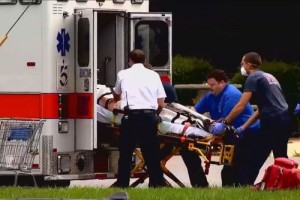
Asheville police said Dalton cut his neck on board the bus as they negotiated with him to surrender.
Family members said his reaction was likely the result of a severe manic episode resulting from Dalton’s paranoia and schizophrenia. Dalton’s cousin, Shanna Browning, said he received the diagnosis at age 18 and it is her understanding that his diagnosis was communicated with police the day of the incident.
“It’s my understand that they knew for 90 minutes that he had a mental illness,” Browning said.
She said it was her hope that piece of information would’ve altered how the encounter played out.
Two Asheville police officers fired a single shot from their service weapons when Dalton finally emerged from the bus. A spokesperson for the department said he lunged toward APD’s Crisis Negotiation Team.
Reflecting on the incident, Browning said she does not fault the officers.
“I’m sure that the cops that morning did not set out to have this situation,” Browning said.
However, she wonders if asking police to take on the role of psychiatric professionals in tense situations like the one involving her cousin is asking too much of them.
“Certainly, when they have signed up to serve and protect, this is part of serving and protecting. But I’m sure their job was not designed to deal with the mentally ill on a daily basis,” Browning said.
The incident prompted further inquiry into mental health and policing.
News 13 learned a strong emphasis is placed on mental health training within Asheville Police Department. Officers undergo Crisis Negotiation Training, as well as Integrating Communication, Assessment and Tactics. Both trainings offer comprehensive information about mental health illnesses they may encounter in the field.
Amy Griffith, Buncombe County director of RHA and Diversion Services, administers CIT training four times a year. She describes it as a week-long immersion in which police become familiar with different signs and symptoms of mental/behavioral health issues, learn about local mental health partners and explore de-escalation strategies among other activities.
ICAT training is a newer model, specific to dealing with subjects in crisis who may have a weapon other than a gun. Chuck Wexler, from the Police Executive Research Forum, helped develop the training he describes as “a way of thinking.”
“What would happen if the police backed out of the situation? Rather than confront the person and try to get them to drop the knife. If there are danger only to themselves –when someone’s in crisis what they really want to do is to talk to someone,” Wexler said.
If an officer determines that someone should be a licensed behavioral health specialist, Griffith said, “ The officer calls the main number. The dispatcher gets the information location. Generally, for law-enforcement, they dispatch a clinician right away.”
Several studies published in the Journal of the American Academy of Psychiatry and the law debate who should take the lead in responding to severe mental health crises, where the need for law enforcement and mental health professionals is clear.
When asked if officers and clinicians should respond together or if other models should be considered for severe mental health cases, Griffith states, “I think it’s a complicated issue and there are so many variables, so I think it’s certainly a conversation that’s being had across the nation.”
Griffith said if any changes were to occur locally, “I think it would be done in a very thoughtful and collaborative way so that it fits the needs of this community.”
Browning’s family falls into a minority of cases where a crisis situation lead to a potentially life-threatening circumstance for her cousin Grant and the officers involved. She said, despite everyone’s best effort, there still appears to be a “gap.”
“I just wish there was a way to close that gap, and I don’t know why that gap is not yet closed,” Browning said.
Please note: This content carries a strict local market embargo. If you share the same market as the contributor of this article, you may not use it on any platform.