NASHVILLE, Tenn. (AP) — U.S. District Judge Eli Richardson, a Trump administration appointee who bucked the president’s conservative base by blocking a Tennessee law that restricts mail-in voting, had an announcement to make before wrapping up his decision: it had nothing to do with politics.
The declaration dropped as lower-court judges, like Richardson, face greater scrutiny over their perceived ideological purity. Richardson even took the step of addressing potential critics in his opinion.
Richardson ruled in favor of expanding the ability of first-time voters in this reliably Republican-leaning state to cast mail-in ballots this election. But first, the lifetime-appointed judge said, he had to “address head-on the proverbial elephant in the room,” declaring his own impartiality in the case.
In his Sept. 9 ruling, Richardson wrote that he was “not concerned about how his decisions could aid one side or the other on the political front.” The judge from Tennessee’s Middle District also said his personal opinions on election laws have “simply no bearing” on the constitutional claims brought before his bench.
For months, President Donald Trump claimed without proof that there could be widespread voter fraud in November, even as officials in states that have relied on mail-in ballots cited little evidence of such.
Nominated in 2017, Richardson wrote he could forgive someone with a “cynical view” that voting-rights lawsuits amount to “really just politics by other means” — particularly in a presidential election year.
Even before the death of Supreme Court Justice Ruth Bader Ginsburg refocused public attention on the judiciary, Richardson’s pointed message highlighted a charged atmosphere nationwide: Judges are coming under intense scrutiny for their every action — through the lens of politics. It’s a spotlight even Trump has encouraged by stating he expects his selection of “conservative judges” to result in rulings supported by his base.
“I think it’s very unusual to make it so explicit that this decision had nothing to do with the judge’s predispositions,” said Brian Fitzpatrick, a Vanderbilt University law professor. “That is something that normally should go without saying.”
Trump’s assurances about his judicial picks have resonated with some of his supporters. Some cite it as justification for backing the president, even if they dislike his tone or other policies.
But as Fitzpatrick noted, those who sift and weigh a judge’s decisions often overlook the fact that judges must act within the tight confines of law and jurisprudence and “don’t have unfettered discretion like politicians think they do.”
Yet when those jurists, who are sworn to impartial justice, make decisions that don’t align with party politics, criticism has flowed freely at times — even from others in the co-equal branches of government including Trump himself.
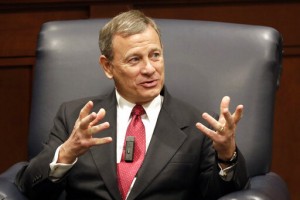
U.S. Chief Justice John Roberts has previously warned that political polarization is skewing how people view the judicial branch, adding that the justices are “not just another part of the political process.” Roberts, who was picked by President George W. Bush, has endured GOP anger over decisions — including recent decisions on immigration and pandemic restrictions on church gatherings.
And one of Richardson’s colleagues in Nashville, another Trump appointee, took a political pounding from conservatives over an abortion ruling in July. U.S. District Judge William “Chip” Campbell blocked an effort by Tennessee Republicans to bar abortions as early as six weeks into pregnancy.
The backlash became the stuff of campaign fodder in Tennessee.
GOP primary opponents in an open U.S. Senate race weighed in. Bill Hagerty, now the Republican nominee, said he’d vote for more “constitutionalist judges who protect the unborn,” and opponent Manny Sethi said, “An activist judge barely waited until the ink was dry to promote his own pro-choice view.”
David Levi, a former federal district judge and director of the Bolch Judicial Institute at Duke Law School, said it can be useful for judges to acknowledge a ruling may be controversial and explain it to the public.
“Judges have to reason out in their opinion and really explain why they reached the result that they reached,” Levi said, adding it could be helpful “for a judge to say, ‘I want to address what I know is on some people’s minds.’”
In contrast, certain opinions by some Trump-appointed judges have drawn high praise from conservatives.
Earlier this year, U.S. District Judge Justin Walker sided with a church in ruling that Kentucky’s largest city could not halt a drive-in Easter time service amid the coronavirus pandemic. Walker’s harsh 20-page rebuke of the officials drew national attention — and praise from Republican leaders.
Meanwhile, U.S. Judge James Ho in Texas has gained attention since being appointed by Trump to a federal appeals court after writing a dissent claiming the courts have treated the Second Amendment right to bear arms as “a ‘second-class’ right.” He also condemned the “moral tragedy of abortion” in a separate opinion.
So far, Richardson has been spared a conservative outcry over his recent vote-by-mail ruling, which blocked a requirement that first-time voters cast ballots in person or show ID at their election office if they wish to vote by mail. He had already ruled against changing two other Tennessee restrictions on voting by mail.
“I realize the president maybe lost this one but in another sense he didn’t,” the law professor Levi said, noting Trump’s resistance to expanding mail-in voting. “He appointed someone who followed the law. We should all be proud we have people like that on the bench.”
Associated Press writer Mark Sherman in Washington contributed to this report.
FILE - In this Feb. 6, 2019 file photo, Supreme Court Chief Justice John Roberts answers questions during an appearance at Belmont University in Nashville, Tenn. U.S. Chief Justice John Roberts, a pick of former President George W. Bush, has endured GOP anger over decisions ranging from immigration to pandemic restrictions on church gatherings. Roberts has pushed back, warning that political polarization is skewing how people view the judicial branch. (AP Photo/Mark Humphrey, File)