LOS ANGELES – The people who make a real difference aren’t those with boldface names or high profiles, actor Ethan Hawke says.
“Most of the people who are really making differences are invisible,” he says. “They’re the mothers and the teachers and the people who go unnoticed, who are kind for no reason. (They) aren’t up on a platform.”
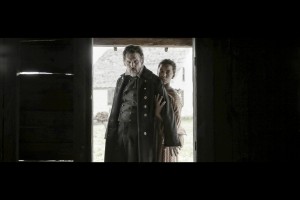
While abolitionist John Brown gets attention as the man who led the 1859 raid on the U.S. Armory at Harpers Ferry, others joined him and agreed to shed their blood without notoriety. Those “others” are part of “The Good Lord Bird,” a miniseries about Brown and the folks he attracted.
Airing on Showtime, “The Good Lord Bird” is based on James McBride’s National Book Award winner. It tracks Brown – played by Hawke – as he plots his assault on slavery just before the Civil War. Told from the view of a young boy who joined Brown’s ragtag band of soldiers, the story includes plenty of Twain-esque characters who offer comic perspective on a deadly serious mission.
“This is the African-American perspective on the white savior that comes to save us,” says McBride, who also served as executive producer. “That’s why it’s so funny. It’s a story of caricature.”
When Hawke expressed interest in producing the book as a film, McBride asked him to join him at church. “So Ethan rode his bike over there because he lives a few blocks away,” McBride says. Hawke asked one of the parishoners if he could leave his bike in the church while they had lunch. “And she said, ‘Are you the guy who came here to fix the air conditioner?’” McBride recalls. “And he said, ‘No. no.’ And he laughed. And I said to myself, ‘If this guy can handle that, he can certainly handle this funny story about John Brown.”
Had it been adapted for the big screen, Hawke says, 80 percent of the book would have been discarded. By putting it on television, “we didn’t have to distill it to 20 percent of James’ book. It’s just such a canvas with so much possibility.”
Told in seven episodes, “The Good Lord Bird” shows a different Brown – one who wasn’t depicted in history books. “If you really study this character, he asks a lot of you philosophically,” Hawke says. “He challenges why so many of us accept the unacceptable.”
Says McBride: “John Brown is a real hero to me and to many Black people who are no longer alive. John Brown gave his life and two of his sons’ lives to the cause of freedom for Black people and he started the Civil War. They buried this man’s story for a long time because nobody could figure out how to tell it without losing money or losing their career or getting themselves deep-sixed some kind of way. We managed to do it.”
What the 49-year-old Hawke liked about McBride’s book is its ability to teach without being overt.
“It’s kind of like what I love about ‘Star Wars,’” he says. “They don’t sit there and teach you about what a Jedi is. By the end of it, you just know. And James’ book doesn’t teach you about the Civil War. It doesn’t teach you about pain and suffering, but it just tells you an unbelievable story.”
Hawke was also taken with the book’s narrator, Onion, a 14-year-old boy who grows into manhood during the course of the story. He’s a great yarn spinner, McBride says. “If you can make an audience laugh, if you can make a reader laugh, they’ll stick with the story.”
Although some characters are racist, “they’re human beings,” Hawke says. “If they’re not real, then the whole world’s not real. We need to have love and respect for the dignity of all the people – that they’re all kind of a victim of this larger river that runs through our history.”
In McBride’s view, “Our story of diversity is a shared story. We should celebrate the shared story we have to tell. When there is judgment, there is no journey.”