With President-elect Joe Biden winning the White House, a Republican-led Senate is poised to keep its investigative gaze on the FBI’s handling of the 2016 election and Russia next year, and GOP senators are already discussing probes into the 2020 election, too.
The potential Republican investigations into Biden and his election win could quickly test the new White House’s relationship with Republicans on Capitol Hill, who — if they keep the Senate — will play a key role in determining how much Biden will be able to accomplish legislatively.
On the other side of the Capitol, House Democrats have multiple lawsuits related to outgoing President Donald Trump’s finances that Democrats could continue next year even after Trump has departed the White House.
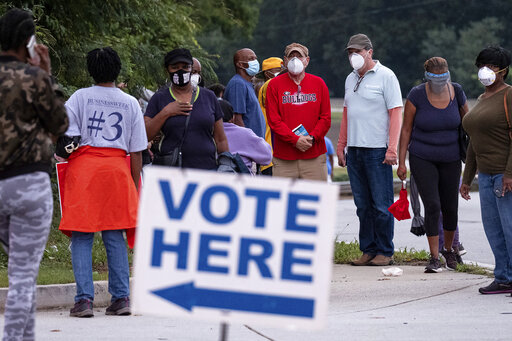
Senate Judiciary Chairman Lindsey Graham, who has encouraged Trump not to concede, said Monday that Senate Republicans should probe mail-in voting in the 2020 election, which Trump falsely claimed would be ripe with fraud for months leading up Election Day. Trump’s campaign has not produced any evidence of widespread voter fraud despite Trump’s claims.
“If we keep the Senate, we need to do a joint committee in the Senate to analyze mail-in balloting and how it worked in 2020,” Graham said on Fox News radio.
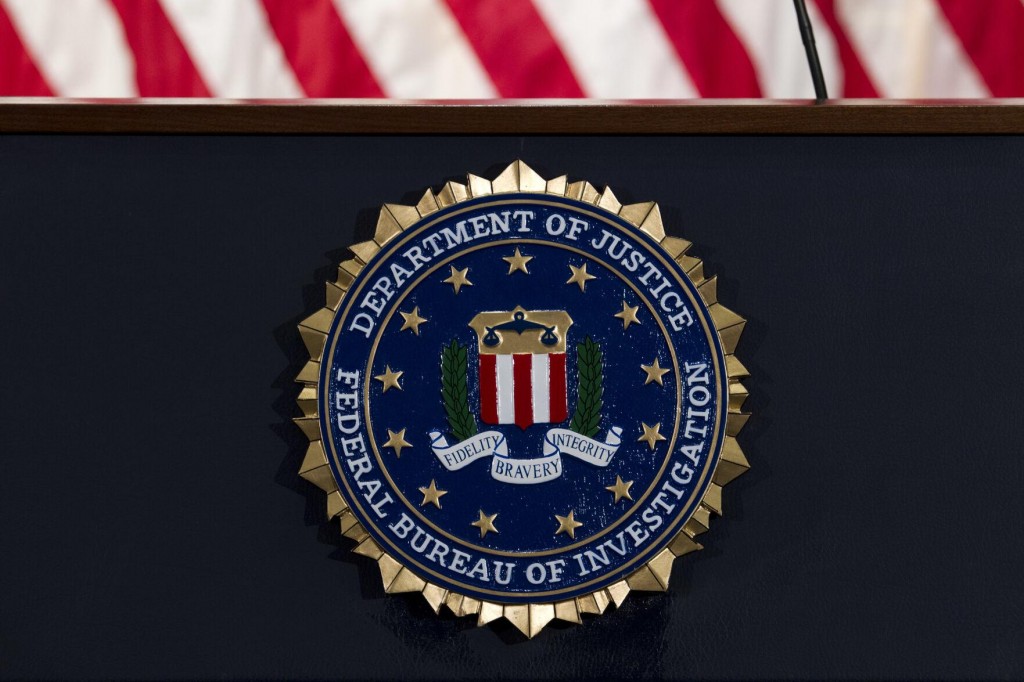
Sen. Ron Johnson’s term as Homeland Security and Governmental Affairs chairman ends this year, but he’s in line to take over a key investigative subcommittee with a bipartisan track record. He said Monday that he expects his investigation into the FBI’s Russia probe, Crossfire Hurricane, would move with him.
“We’ll continue to investigate the corruption that led to Crossfire Hurricane investigations,” Johnson said.
On Tuesday, Graham brought in former Deputy FBI Director Andrew McCabe to testify in the Judiciary Committee on the FBI’s Russia investigation, the fourth public hearing he’s held on the subject this year. “This committee is not through,” he said at the conclusion of the hearing. “We’re going to keep digging until we find out how the most high-profile investigation of a candidate for president of the United States, eventually a sitting president, was handled so poorly.”
In an interview last week, Johnson said that he would also consider investigating claims of voter fraud in the 2020 election. “Depending on what is uncovered, I am certainly open to holding a hearing to highlight election fraud,” he said.
Both Johnson and Senate Finance Chairman Chuck Grassley probed Hunter Biden’s business dealings in Ukraine following Trump’s impeachment, an investigation that Democrats slammed as a political attempt to use taxpayer resources to hurt Biden’s campaign. In September, the Republicans released a report that raised questions about Hunter Biden’s foreign financial dealings that did not uncover any evidence Biden abused his powers or changed US policy because of his son’s business ties. A purported laptop from Hunter Biden has fueled conservative calls to investigate the Bidens.
In the interview, Johnson said that his decision on investigating Hunter Biden’s business dealings next year “completely depends on what other information is revealed or if any other whistleblowers come froward.” On Monday, however, he said he wanted federal investigators to look into the matter before he addressed it.
Grassley sent a letter to Attorney General William Barr on Tuesday suggesting he wasn’t done looking into Hunter Biden either, asking DOJ to examine whether he complied with foreign lobbying laws.
A committee shakeup
The landscape of next year’s Senate remains uncertain: Republicans currently hold a 50-48 advantage, with likely two runoff elections in Georgia looming. If either GOP Sens. David Perdue or Kelly Loeffler win their expected runoff, Republicans will keep control of the Senate. If Democrats win both seats, they would control a 50-50 Senate thanks to Vice President-elect Kamala Harris breaking the tie.
If Republicans keep the Senate, Johnson, Graham and Grassley would all be leading new committees.
Johnson is termed out of the Homeland Security gavel, but he is in line to become chairman of the Homeland Security Committee’s Permanent Subcommittee on Investigations. The committee, which has a massive budget and freedom to investigate a broad range of topics, has been a bright spot of bipartisanship in the last decade with Republicans and Democrats working together to highlight issues around sex trafficking and the financial crisis.
“There’s decades of recent tradition which I hope Ron Johnson will follow,” former Sen. Carl Levin of Michigan, who was the longtime top Democrat on the subcommittee, told CNN. “He’s got a choice, he can either maintain that tradition or he will be a partisan. And I hope he’ll choose the bipartisan route.”
Sen. Tom Carper of Delaware, the top Democrat on the subcommittee, said he hadn’t spoken to Johnson yet about its priorities in the next Congress.
In addition to the FBI’s Russia investigation, Johnson said that he plans to use the committee to investigate social media companies and how they handled political speech on their platforms.
“The social media inquiry will focus on all the power they have amassed and how they can misuse it,” Johnson said. “Election interference is certainly one area they deny. I do not believe them. Censorship and demonetizing, shutting down sites is another abuse to investigate.”
GOP Ohio Sen. Rob Portman, who led investigations with Carper on Russian oligarchs and Chinese telecom companies as chair of the Permanent Subcommittee on Investigations, is in line to lead the full Homeland Security Committee next year, should Republicans keep the Senate.
Under Johnson, the committee held party-line votes on subpoenas for the Ukraine and FBI investigations, after the panel’s top Democrat Sen. Gary Peters of Michigan objected to the subpoenas. The expectation is that the committee under Portman will cover more bipartisan ground, including opioids, cyber security, securing the supply chain and coronavirus oversight.
Peters’ aides have spoken to Portman’s staff already about oversight of the coronavirus pandemic response, according to a Peters aide.
McCabe testifies Tuesday
On the Judiciary Committee, Grassley is poised to return to chair the committee after two years leading the Finance Committee, with Graham moving over to lead the Budget Committee.
Both Grassley and Graham have probed the FBI’s Russia investigation after a scathing inspector general report was released in late 2019 over Foreign Intelligence Surveillance Act warrants. Those probes have touched on Biden — after his name was included in the list of people who made “unmasking” requests, a routine intelligence practice, during the Trump transition — though it’s unclear if Graham will try to wrap up his investigation or pass it along to Grassley to continue next year.
At McCabe’s Judiciary Committee testimony Tuesday, Republicans attacked him for the FBI’s missteps, accusing McCabe and the bureau of targeting Trump. McCabe defended the investigation, however, saying, “We didn’t open a case because we liked one candidate or didn’t like the other one.”
Grassley was coy on Monday about what he might take with him to Judiciary next year.
“When I do investigations, it doesn’t matter who is President. It is my constitutional responsibility of oversight to investigate whatever needs to be investigated,” Grassley said. “What I am doing in Finance, if it is not completed and I keep the same people, and hopefully I will, I will move them to Judiciary and we’ll keep doing the same thing.”
This story has been updated with additional developments Tuesday.