Even when a winner is unanimously declared, President Trump has made it clear he isn’t going down without a fight. Several states are dealing with lawsuits filed by his campaign based on empty allegations of voter fraud. Trump himself has said he will not concede.
If one has money to spend and means to acquire it, we’re used to getting exactly what we want when we want it.
This immediacy is a cornerstone of our commerce and our life. It comes at a premium, leading to the illusion that money and power can make anything appear out of thin air.
But we’re having to hold our breath
But money can’t buy election results, and it can’t buy our way out of any of the problems this year has visited upon us.
But ultimately, a virus can’t be cajoled, convinced or paid to go away, and it could take months before a viable solution even appears, let alone is put into play.
We were told, specifically, that we may not have an instant relief from the long months of political rancor that led us to the fulcrum of this presidential election.
And yet, we hold our breath until we’re blue in the face.
Because we don’t like waiting. Because we want it to be over. Because it feels like everything is happening all at once, and yet, nothing is.
We’re no longer in control
Adjacent to our routines of instant gratification is the very American idea that we are architects of our own destiny.
“Part of the challenge right now is, we would like to control things and decide things on our terms,” says Lynn Bufka, the American Psychological Association’s senior director of practice transformation and quality.
“We’re used to making decisions about how our lives function, when we do things, where we go. Relying on an external process can be hard”
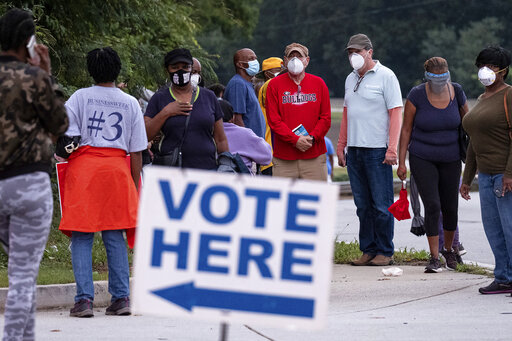
Other than voting, wearing masks, and generally trying to embody ideals we believe in, there’s not a lot the average person can do to stop a pandemic or accelerate the results of an election.
Our routines have been upended
On top of it all, when we have to wait for things, we are comforted by at least knowing when they will happen.
Numbers, calendar dates, holidays and work schedules order the movement of our lives, laying out the destinations ahead.
Baseball starts in April. We’ll plan a trip this summer. School’s in session. Election Day is in November. Church is on Sunday. We’ll get together at Thanksgiving.
This inner sense of time has been so profoundly upended, it’s not just the uncertainty surrounding key questions — about presidencies, about financial futures, about our health — that keeps us up at night.
It’s the deeper anxiety of not even knowing when these moments will happen.
Time means nothing. Without these familiar frames of reference, without a feeling of control over the future, the act of waiting becomes an agonizing pursuit with no clear end.
But waiting can save us
But this waiting, this thing we do so poorly, could be the very thing that saves us.
After all, the very reason things like elections and medical breakthroughs take time is because they’re too important to mess up.
In the days since the election, advocates of every political stripe have united behind a single message: Every legal vote must be counted.
“That’s why we are still in the middle of election week in an instant gratification society that is unaccustomed to waiting for the process to work,” writes CNN commentator John Avlon.
In the same vein, the development of a successful coronavirus vaccine requires care, scientific rigor, and vigilant oversight — all things that can’t and shouldn’t be rushed.
And the reality is, even a successful vaccine isn’t an immediate and universal fix. Health experts across the board have advised that we can’t pin our hopes on a single fix.