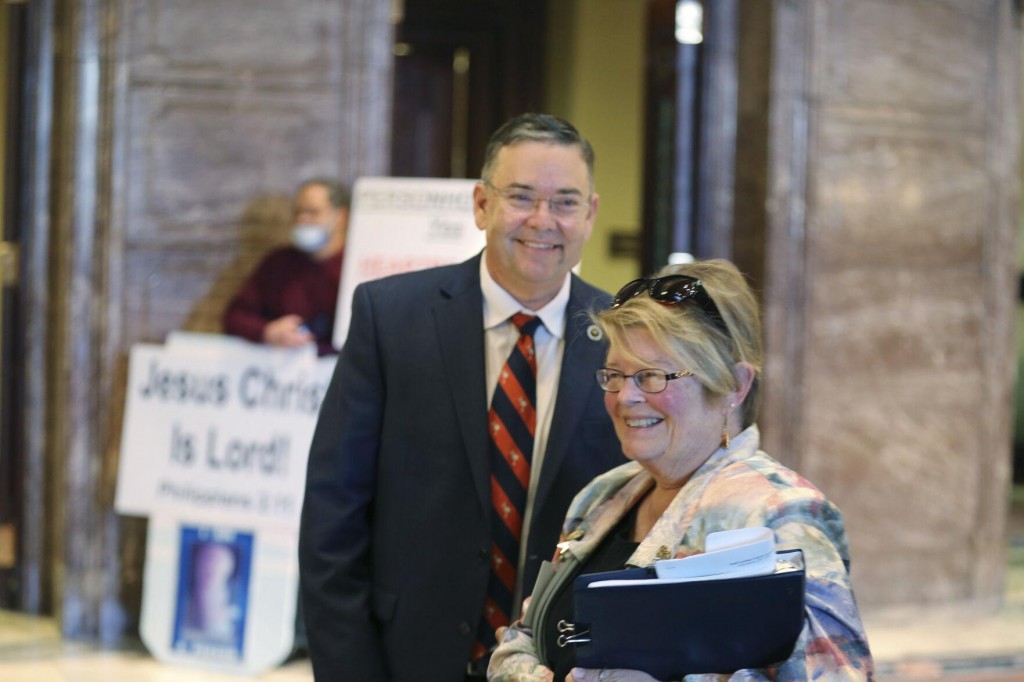
With a year of governing through a pandemic behind them, we asked Calhoun City Administrator Paul Worley and Gordon County Administrator Jim Ledbetter to reflect back on working through the challenges of COVID-19.
We also asked them to look ahead at the months to come. Here are their responses in our local government Q&A:
Q: What have some of the challenges of governing during COVID over the last year?
Worley: It was definitely a challenge. I was appointed in early February. When we started rolling into March, things started really getting strange. With the COVID Task Force, I can remember meeting in person maybe the first of March before that first shutdown, which is strange to think about now. That’s how new it was to everybody. We didn’t know exactly what we were dealing with. Those early days during the onset were truly challenging. We just tried to work through it the best we could. It’s been really nice having that COVID Task Force. That’s helped me to try and communicate some of that information down to the department heads. It’s a 300 employee organization, so we were trying to communicate the best we could, even though we didn’t know exactly know what we were dealing with.
We had to continue to operate as usual. We just had to handle it the best we could and try and keep our employees as safe as possible. Hats off to all the front line workers who kept things running. It’s been especially a challenge, internally, dealing with employees who got sick. We had our fair share of sicknesses, but we were able to mitigate and not have an entire department out at the same time so we’re pleased with that.
One of our biggest challenges and sorrows was losing two employees. Derrall Culberson who was a senior accountant … she was a wonderful person, and a very dedicated employee to the city. Everyone depended on her knowledge and expertise. And also, Municipal Court Clerk Linda Blackstock, who was just an expert and a professional. A go to person.
Ledbetter: The first cases of COVID-19 were detected in Georgia on March 2, 2020. On March 3, 2020, AdventHealth hosted a meeting of health professionals, first responders, and government officials. This group became the COVID-19 Task force. The Task Force, which continues to meet, has operated with a high level of cooperation between diverse agencies in Gordon County. The Task Force was instrumental in delivering supplies and personal protective equipment to vulnerable populations, dissemination of information and development of protocols and polices to protect first responders and the public.
The first challenge was to learn as much as possible about the virus in order to formulate appropriate responses. County leadership attended all available briefings ranging from local health officials, the Department of Public Health, Infectious Disease Specialists at Emory Hospital, the CDC, Homeland Security, Governor’s Office and Whitehouse. At the same time, essential government services such as emergency response, fire protection, and police protection, had to continue. Emergency Management was crucial in locating PPE, masks, gloves and sanitizers to protect first responders from exposure. The County had to make adjustments so people could safely carry on basic services such as filing deeds, paying taxes, getting car tags and permitting construction, etc.
The Gordon County Board of Commissioners acted on March 17, 2020 to establish guidelines to keep essential Government Services open while protecting employees and the public from the spread of the virus. These guidelines and responses were soon replaced by the Governor’s executive orders that actually took away local control over most of the pandemic response. Now, a year later, we remain subject to the Governor’s orders for COVID response.
Q: What have been some financial budget challenges, and also maybe some positive surprises over the last 12 months?
Worley: Overall we’re pleasantly surprised with how well it’s gone. We took a very precarious approach when we were developing the budget.
Last April and may we were in crunch time having to decide exactly what the next year was going to look like. We didn’t even know what tomorrow was going to look like.
The most challenging area has been some of the tourism industry that has shut down and hotel/motel tax. Utility tax has also suffered as we’ve had some major plants that had to shut down, so that hat has had a pretty negative impact.
Ledbetter: The County incurred unanticipated expenses due to COVID. Most significantly, we faced the busiest election in our history in the midst of the pandemic. The Elections Department did an excellent job in keeping people safe while they voted. The county established screening stations in the Courthouses, bought sanitation equipment and installed glass shields in various departments in an effort to impede the spread of germs.
The economic impact of the pandemic on county revenue has not been as severe as we feared so far. Some departments, such as the senior center and parks and recreation actually spent less due to restrictions on programs. In addition, the county received more than two million dollars in COVID relief funding to offset expenses. I am thankful for the support of the Board of Commissioners for giving Gordon County the resources and ability to make adjustments and obtain necessary equipment and supplies to keep the government functioning safely.
I should mention that some of our community partners that have been a huge help. Rock Bridge Church and the City of Resaca donated many gallons of hand sanitizer. The Voluntary Action Center, Frosty Crème, Senior Center and the school systems provided countless meals to the community. The GEM Theatre continues to be very generous in offering its facility as a safe meeting space where citizens can meet while maintain a safe social distance.
Q: Is there anything in the way local government operates that might not/shouldn’t necessarily go back to “normal” moving forward?
Worley: Some things I would see us continuing are some of the sanitary precautions we have been taking. We’ve installed some of the sneeze guards and hand sanitizer stations in our public buildings. Offering a clean building for the public is important. We’ve looked at employee workspace areas, making sure people have a safe distance to work from. In the area of public safety, personal protective equipment and materials we keep on hand will likely change. Last year, supplies had disappeared, and if you don’t have those for your departments, you can get in trouble quickly. They had to squeeze and save every nickel they could to make ends meet, so we need to consider being able to keep a better supply and that’s our plan going forward … to be better equipped and better supplied.
Ledbetter: The virus has had a permanent impact on most of our families. Loved ones have died, elderly parents in long term care have been isolated from their families, and small businesses have suffered to name a few impacts that will have lasting effects. As far as impacts on county operations, I think we need to continue to plan for emergencies and maintain sufficient monetary reserves in case of future disruptions whether pandemic or some other type of disaster. This pandemic has brought out the best in cooperation between the local governments, first responders, healthcare, churches and charitable organizations. I am thankful for the support of the Board of Commissioners for giving Gordon County the resources and ability to make adjustments and obtain necessary equipment and supplies to keep the government functioning safely.
Q: What are your thoughts on looking ahead and moving forward out of the COVID economy?
Worley: Sales tax has remained strong. A lot of people cancelled plans and stayed here and spent money locally and they were able to shop local. We saw that positive impact in our sales tax returns, but it really started rebounding last summer and into the fall. We’re definitely optimistic about that. We’ve been able to over perform on our revenues and we’ve kept our expenses in check, but we’ll have to hold off until we get a better feel from the different departments.
Ledbetter: Gordon County has been able to maintain a sound financial position through the pandemic. Moving forward there is a great deal of development interest in the county. Subdivisions that may have lots for hundreds of new homes are being planned. In addition, several million square feet of industrial space is planned for Highway 41 South. Of course Buc-ee’s should open in the summer of 2021. If the economy stays strong, I think we will see rapid growth in our community that could challenge our infrastructure and emergency personnel. I expect it will be challenging to meet the needs of a growing community while maintaining our “small town” way of life and keeping our tax rates low.
My closing thought would be a huge Thank You to the people of Gordon County. We have navigated this pandemic peacefully and in cooperation with one another. My heart breaks for those families that have lost loved ones to the virus. I pray we are turning the corner to recovery and will get this pandemic behind us as soon as possible. We will take lessons learned from the pandemic and try to stay prepared for the next challenges that may come our way.