Voters in all five states with marijuana legalization on the ballot this November approved the measures, CNN projects.
Montana has voted to both establish 21 as the legal age to purchase, possess and consume cannabis by constitutional amendment and to legalize marijuana for recreational use, CNN projects.
Arizona and New Jersey also voted to legalize recreational marijuana, while South Dakota approved legalization for both recreational and medical use, CNN projects. South Dakota will be the first state ever to approve medical and recreational marijuana measures at the same time.
Mississippi has voted to legalize medical marijuana, becoming one of the first Southern states to do so.
The initiatives would only be the first step in the process, said John Hudak, deputy director at the Brookings Institution, where he specializes in state and federal marijuana policy.
After voters approve the measures, he said, the state legislatures normally would need to set up regulatory structures within each state.
New Jersey navigates mail-in ballots
In New Jersey, where medical use already is legal, state lawmakers, unable to drum up enough support to pass a bill to fully legalize marijuana, agreed to place the question directly to voters: “Do you approve amending the Constitution to legalize a controlled form of marijuana called ‘cannabis’?”
Public Question No. 1 will amend the state constitution to legalize cannabis for personal, non-medical use by adults 21 and older. The state commission that oversees the medical market will also regulate the personal market.
Gregg Edwards, executive director of Don’t Let NJ Go to Pot — the group formed in opposition to the ballot question — called the move to change the state’s constitution “pretty extreme.”
“Now cannabis is going to appear in the New Jersey Constitution alongside the freedom to associate,” he said. “And once it’s in the Constitution, the likelihood of it coming out is slim or next to none.”
Edwards said that normally, he would have spoken with parent-teacher organizations and local chambers of commerce to build support for the opposition effort, but because of Covid this year this year “they just haven’t been available to us.”
“We would have liked to spend the spring, summer and fall talking to folks,” he said. “It’s just been next to impossible.”
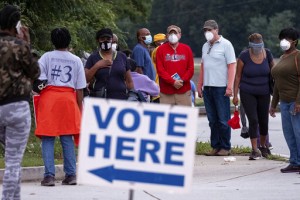
But organizers — facing the challenges of expanded mail-in voting in the state due to Covid-19 — said they had to help voters, some new to the mail-in-ballot process, find the question on the ballot itself. Depending on the county, it was likely on the backside of the ballot.
“We have to drill down on making sure people know they have to flip the ballot over,” said Tara Martin, with NJ CAN 2020, which is leading the campaign in support of the ballot question.
South Dakota ‘leapfrogs’
South Dakota had two measures on the ballot:
Measure 26, which would establish a medical cannabis program and registration system for people with qualifying conditions.
Amendment A, which would legalize cannabis for all adults and require state legislators to adopt medical cannabis and hemp laws.
By approving both measures, according to CNN’s projections, South Dakota successfully leapfrogged a traditionally multi-step process.
Many states have followed a multi-year path toward full legalization, starting with decriminalization, followed by medical use and then full legalization. No other state has ever completed multiple steps at once.
South Dakota currently has tough penalties for possession of even small amounts of cannabis.
Republican Gov. Kristi Noem opposed both ballot measures, and recently appeared in an advertisement urging a “no” vote against full legalization.
“The fact is, I’ve never met someone who got smarter for smoking pot,” Noem said in the ad. “It’s not good for our kids and it’s not going to improve our communities.”
On potential passage, Hudak, of the Brookings Institution, said before Election Day: “It would be a pretty significant step toward understanding just how progressive people are ready to be, in unlikely states, around this issue.”
Polling strong in Arizona
Arizona’s Proposition 207 will allow adults 21 and older to possess, consume or transfer up to 1 ounce of cannabis and create a regulatory system for the drug’s cultivation and sale.
A similar provision failed in 2016 by less than 3 points, but this time around, polling consistently found majority support. An October Monmouth University poll found 56% support for Proposition 207 among registered voters, and 36% opposition.
Advocates credit higher support for this year’s effort to a reworked ballot question. Besides legalizing marijuana, the proposition would set up a pathway to strike prior convictions for marijuana from criminal records and includes a provision for home growers.
Republican Gov. Doug Ducey opposed this year’s ballot measure, asking voters to again vote “No.”
Ahead of Arizona’s vote to legalize recreational marijuana use, Julie Gunnigle, the Democratic candidate for Maricopa County attorney, said passage would be a powerful bellwether for other parts of the country.
“If Arizona can do it, the rest of the country is ready,” said Gunnigle, who supports Proposition 207.
Montana revamps its signature drives
In Montana, the window to gather the tens of thousands of signatures needed to place its two legalization questions on the ballot collided with the early months of the pandemic and stay-at-home orders.
The state had two initiatives:
Initiative 190, which would allow adults in the state to possess and buy cannabis for recreational use and defined a 20% tax on recreational cannabis. It would also allow people serving sentences for certain cannabis-related acts to apply for resentencing or records expungement.
Initiative 118, the second question, would amend the state’s constitution to establish 21 as the legal age to purchase, possess and consume cannabis.
Once the state’s stay-at-home order was lifted in late April, organizers had to get creative to collect the 76,400 signatures required to make the ballot in June. They relaunched the signature drive with new health protocols in place, including hand sanitizer, distancing, temperature checks for volunteers and a new pen for every signer.
“We took a series of steps to make sure the pandemic didn’t take away Montana’s constitutional ballot initiative process,” said Matthew Schweich, deputy director at the Marijuana Policy Project and one of the leaders of the Montana and South Dakota ballot efforts.
Like Arizona, pre-election polling showed support for legalization. Among likely and active Montana voters, 49% support legalization while 39% oppose it, according to a Montana State University poll released in October.
Mississippi’s medicinal push
Mississippians considered two dueling proposals to legalize medical marijuana. The state’s unique ballot structure asks voters whether they are for approving either Initiative 65 or Initiative 65A, or against both.
Initiative 65 would allow physicians to recommend medical cannabis for patients with any of 22 qualifying conditions such as cancer, multiple sclerosis and post-traumatic stress disorder. The constitutional amendment would establish a regulatory program for businesses to grow and sell medical cannabis and for the products to be taxed at a 7% rate.
Initiative 65A would limit the smoking of medical cannabis to people who are terminally ill, and would leave the regulatory framework up to the Legislature.
Even if a person voted against both, they still had the opportunity to choose between the two.
Should either measure pass, Hudak said, “it would signal a pretty significant change in politics around cannabis in the South in a way we really haven’t had a good test of yet.”
Is it the end of the road for legalization via ballot measure?
Advocates say they first pursued the piecemeal ballot measure process to legalize cannabis because it was easier than navigating the time-consuming efforts in state legislatures. But they’re running out of states that use ballot measures to shape public policy, Hudak said.
“Conversations are getting more serious,” Hudak said. “A lot of progress has been made at the legislative level, even if there’s not a lot to show for it.”
But Schweich, of the Marijuana Policy Project, hopes voters’ decisions on Election Day will serve as a tipping point toward a national conversation.
“The reason there’s a conversation in Congress is because of all of the victories that have already occured at the state level,” Schweich said. “If we can win in New Jersey, Mississippi, South Dakota, Montana and Arizona, it’s going to send a really loud message to Congress that it’s time to fix this at the federal level in 2021.”