Overtourism was the travel buzzword of 2019, as destinations around the globe, from the hiking trails of Machu Picchu to the canals of Venice, battled the impact of throngs of visitors.
Amid all the planning, predicting and projecting, there’s one thing these destinations couldn’t envisage: the travel industry grinding to a screeching halt as Covid-19 spread across the world.
Travel bans, quarantines and nationwide lockdowns have forced most travelers to stay home, and destinations that previously struggled with too many tourists have been left reeling.
But is overtourism truly over for good? CNN Travel checked in with locals and officials from some of the world’s most popular tourist spots to find out what it’s like on the ground in these once-bustling destinations.
Dubrovnik, Croatia
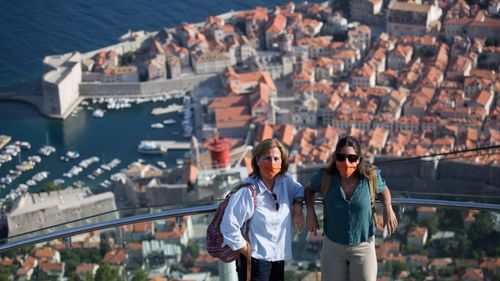
A sea of terracotta red roofs, a fortress-like Old Town and an association with one of the most popular TV series of the 2010s led the Croatian capital of Dubrovnik to witness a surge in tourism numbers in recent years.
Alongside travelers who flew in for long weekends, Dubrovnik also saw footfall from thousands of cruise ship passengers who disembarked for the day, flooding the city’s Old Town and leaving by nightfall.
Over the past couple of years, mayor Mato Franković and other city officials vowed to get the situation under control, as the city featured in “Game of Thrones” became increasingly packed.
New regulations came into place in 2019 to restrict the number of cruise ships in the city’s old port to just two at a time, the result of a partnership with the Cruise Line International Association (CLIA).
A ban on new outdoor restaurants was also proposed, and 80% of the city’s souvenir shops were shuttered.
As 2020 began, officials questioned whether such new rules would make an impact.
Then in March, the pandemic hit Europe. Croatia closed its borders and the tourists stopped coming.
When Dubrovnik left lockdown in early summer and tourism tentatively restarted, the tourists returning to Dubrovnik were mostly Croatians on staycations. It wasn’t until flights started up again in the summer that international visitors began to return.
But it wasn’t to last — Covid numbers began to rise again and tourism declined once more.
“The UK put us on the red list, and then it went all down again. The airlines just one by one cut the number of flights,” Dubrovnik’s deputy mayor Jelka Tepšić tells CNN Travel. “Without flights and without the UK market, Dubrovnik has very low tourist figures.”
Local tour guide Ivan Vukovic says it’s been strange to see Dubrovnik so quiet, even though he’s enjoyed the break from large crowds.
“The atmosphere this summer is the atmosphere like in the 90s, when the war was going on, only the grenades were not flying all over our heads,” he tells CNN Travel.
The city may have grown from the ashes of war into a thriving tourism destination — perhaps too thriving, in many locals’ eyes — but now the question is whether it can use the catastrophe of Covid-19 as a chance to reset.
Tepšić says the cruise rules — and Dubrovnik’s other overtourism restrictions — will not be relaxed when international flights recommence and the city encourages visitors to return.
Dubrovnik wants to make it clear to future visitors that the city takes both overtourism — and the virus — seriously.
“At the entrance of the Old City, we have a big banner warning people to wear masks, to keep distance, to wash hands, use the sanitizers etc. and beside those rules, we have the Respect the City program rules as well,” says Tepšić.
Unlike most European destinations, Croatia is permitting Americans to visit — as long as they present a negative Covid-19 PCR test that’s no older than 48 hours. A lack of flights makes this difficult for the average American to take advantage of, but some elite travelers with access to private jets are making the most of it.
Luxury tourism, says Tepšić, is something the city will continue to focus on going forward.
That said, city officials and those in the private sector are keen for all kinds of visitors to return — they just want a more sustainable, focused future.
The aim, says tour guide Vukovic, isn’t a return to overtourism — it’s “some kind of ‘normal’ tourism, if possible.”
Barcelona, Spain
The Catalan city of Barcelona, with its soaring Gaudi spires, sandy beach and al fresco bars, has been a tourism hotspot since the 1992 Olympic diving competition showcased the city’s beauty to international audiences.
Today, tourism generates between 12 to 14% of the city’s GDP and 9% of overall employment, says Xavier Marcé, Barcelona City Council’s councilor for Tourism and Creative Industries.
But in recent years, city officials and locals, worn down by overtourism, have started re-examining this reliance on holiday business.
The pandemic has served to further reinforce the importance of creating spaces in the city center that can be enjoyed by locals as well as tourists, Marcé tells CNN Travel.
The restaurants and businesses in Barcelona’s Ciutat Vella have been disproportionately impacted by the pandemic, he explains.
Prior to Covid-19, Barcelona had introduced a series of measures designed to combat some of the throes of overtourism.
The city clamped down on vacation rentals, introduced a tourism tax and encouraged travelers to visit neighborhoods outside the overcrowded old town.
Marcé says Barcelona will “maintain its firmness intact” when it comes to these management strategies.
There are no plans to change the way the city clamps down on illegal rentals or tourist behavior — “although logically, the decrease in activity has led to a reduction in incidents in these areas,” adds the councilor.
Following the end of its strict lockdown, Barcelona only had a brief window in which international travelers could easily visit, before Spain found itself on other countries’ quarantine lists.
By September, international tourism was down by 77%.
Today, the city, like others in Europe, is struggling to quash a fresh surge of Covid-19 cases, and a nighttime curfew is in place to try to stop rising figures.
Marcé says he isn’t worried about tourism failing to recover in the future, but he emphasizes the importance of avoiding the pitfalls of the past.
Machu Picchu, Peru
The famous Inca citadel of Machu Picchu is atop many travelers’ bucket lists, thanks to those soaring views of archaeological wonders framed by verdant mountains.
But for much of 2020, Peru’s most famous landmark was out of bounds.
The South American country went into a strict lockdown on March 15, which lasted through June.
In the summer, it was announced that Machu Picchu would open to domestic tourism, but this failed to materialize as Covid cases in Peru rose.
Sarah Miginiac, general manager for South America at adventure company G Adventures, who lives in Peru, tells CNN Travel that tourism operators have been working closely with Peru’s Ministry of Culture and the Ministry of Environment to establish new protocols to keep visitors to Machu Picchu Covid-secure — and ensure tourist numbers remain under control.
Since then, tourists must pre-book tickets that are valid for up to four hours. Under this system 5,000 people can complete the trek per day.
When Machu Picchu reopens, this number will be cut further in order to ensure social distancing.
“The new rule is that there’s going to be only 75 persons allowed in Machu Picchu at a time,” says Miginiac. “The size of the group is going to be a maximum of seven people, plus a guide — we’re going from over 5,000 to only 675 per day.”
Ensuring travelers return to Machu Picchu in a more sustainable way is also key, with Miginiac suggesting that the current restrictions on visitor numbers could provide an opportunity to promote other beautiful, lesser known destinations within Peru.
A visit to the Italian city has long been a popular city break, but as tourist numbers have soared over the past decade, locals have increasingly fought back — protesting the cruise ships in the city’s lagoon and vocalizing worries that Venice could become a theme-park-version of itself.
Various regulations and new rules designed to handle the influx of visitors have been introduced over the years — including bans on new hotels and city center fast food spots. A steep access fee for day-trippers on popular dates was set to launch in July 2020, but ultimately postponed.
On top of its overtourism woes, last year the Italian city battled catastrophic floods.
Northern Italy became one of the first European regions to feel the brunt of Covid-19 in late February.
Venice went into lockdown and so began months with no tourists.
When international borders reopened in the summer, visitor numbers were nowhere near comparable to previous years.
For some locals, it was the bizarre culmination of what they’d been dreaming of for years — just in terrible circumstances.
“Everyday life is a lot more pleasant without the congestion created by the crowds of tourists that came in large groups,” says Venetian Jane da Mosto, co-founder and executive director at We Are Here Venice, a non-profit association that’s been campaigning for several years to reclaim Venice for locals.
As in Dubrovnik, cruise ships became a moot point as the industry shut down.
Pre-Covid, an estimated 32,000 cruise ship passengers visited Venice per day and many campaigners were actively discussing their impact on the city.
Fewer tourists means “the beauty of the city, it’s architecture, water and views is much more evident,” da Mosto tells CNN Travel.
“But it has come at an enormous cost – a lot of people are out of work, shops aren’t selling much and the cultural sector has been drastically affected,” she adds.
Expert view: Tourism will bounce back
Many other destinations around the word — from historic cities like Amsterdam and Prague to beauty spots like Thailand’s Maya Bay and the beaches of Bali, Indonesia — have also suffered the consequences of too many tourists in recent years.
Now, they too are suffering the consequences of a lack of visitors.
And while overtourism might have wreaked havoc on destinations, the phenomenon also followed some predictable patterns: a destination became popular, people flocked there, the destination struggled to cope, solutions — some effective, some less so — were proposed.
Covid-19, however, is not particularly predictable, at least not in the long term.
This, says Tony Johnston, head of tourism at the Althone Institute of Technology in Ireland, makes planning for the future difficult.
“The [tourism] industry is an industry which has traditionally relied on very stable and very predictable models of growth,” he tells CNN Travel. “And that’s just been completely removed.
“Nobody knows how the next six months, 12 months or even longer-term future is going to look — so it’s very difficult for policymakers to plan, and very difficult for the commercial side of the industry to plan.”
Johnston posits that no matter a destination’s intentions now, when and if the Covid threat is mitigated, it’ll be difficult for planners and policy makers to juggle pressure from industry lobby to bring tourists back quickly, while avoiding a return to the overtouristed problems of the past.
That said, there will be some travelers who will remain unwilling or unable to travel again, whether due to health concerns or considerations of their carbon footprint.
Still, there’s a reason these destinations were overtouristed to begin with — a lot of people want to visit them.
That’s not likely to change irrevocably, even if numbers take a while to stabilize. After all, if you’ve never visited Venice, living through a global pandemic might make you wonder why you never got around to it.
“Bucket list travel locations are going to be one of the things that stimulate the recovery, for sure, people will want to do things immediately, once they have an opportunity to do so,” suggests Johnston.
The tourism industry is “very volatile, but very, very resilient, and very adaptable,” he adds.